Sports Nutrition Market Size, Share, Forecast, & Trends Analysis by Type (Sports Supplement {Protein Supplement, Vitamins}, Drinks, Food), Formulation (Powder, Liquid), End User (Athletes), Distribution Channel (Off-trade, On-trade)ΓÇöGlobal Forecast to 2032
Market Overview
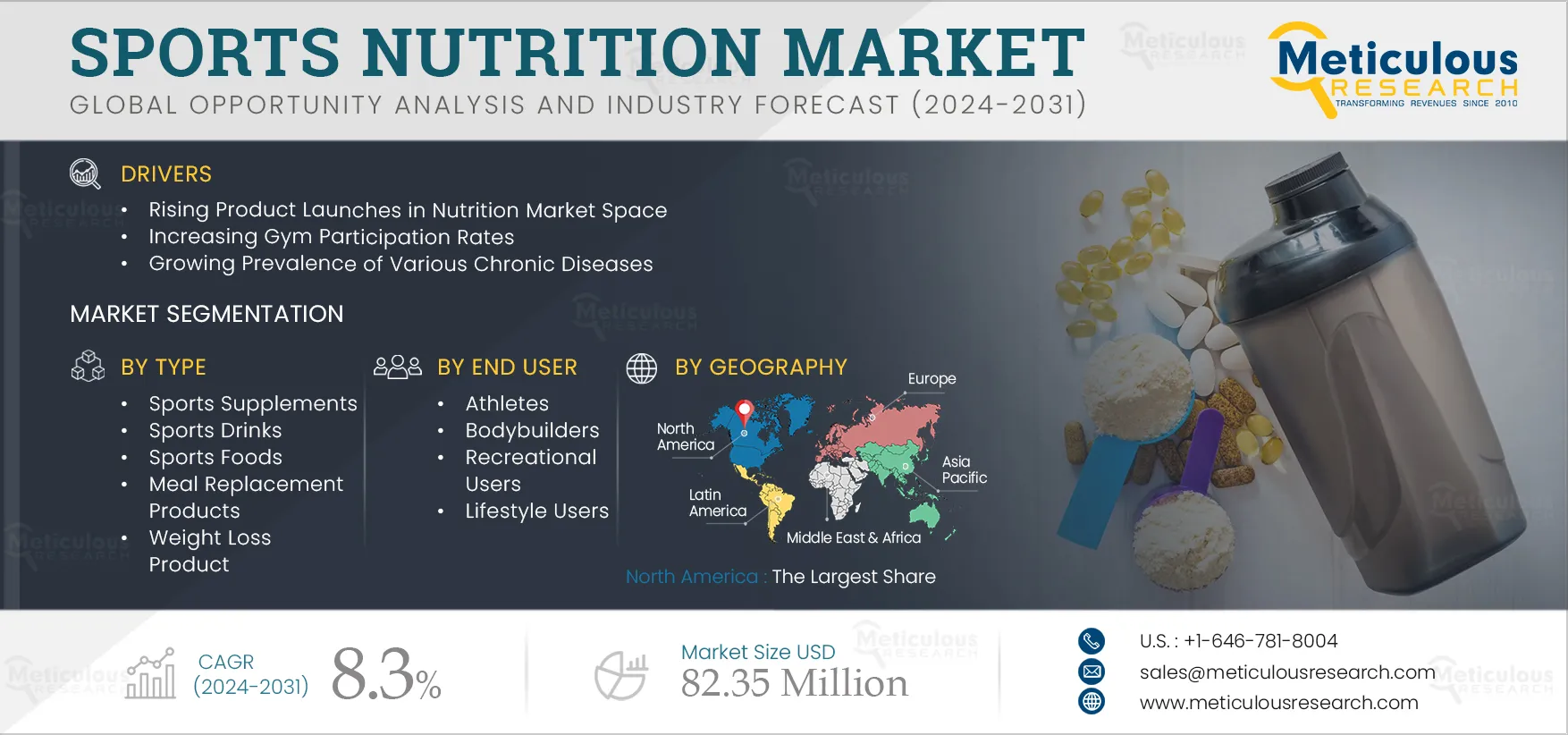
The market growth is driven by an increase in product launches within the nutrition industry, a rising gym-going population, the growing prevalence of chronic diseases, and higher health expenditures. However, the high prices of sports nutrition products and regulatory complexities are anticipated to partially restrain this growth.
In addition, the growing consumer demand for plant-based nutrition products, increasing promotional activities by fitness influencers, and rising online retail platforms are expected to generate market growth opportunities. Moreover, prominent trends in the sports nutrition market include the increasing awareness of health and wellness and the rising adoption of clean-label products.
Click here to: Get Free Sample Pages of this Report
Market Growth Drivers
Increasing Gym Participation Rates
The increasing number of individuals engaging in fitness activities, particularly the people going to the gym, is significantly driving the demand for sports nutrition products. As awareness of the importance of maintaining a healthy lifestyle rises, more people are visiting gyms and fitness centers to improve physical fitness, enhance athletic performance, and achieve personal wellness goals. This trend extends beyond professional athletes to a wider demographic, including recreational gym-goers, fitness enthusiasts, and individuals seeking general health improvements.
As more individuals adopt regular exercise routines, there is a strong emphasis on optimizing performance and recovery. This trend has driven an increased demand for sports nutrition products, including protein supplements, energy bars, hydration drinks, and other performance-enhancing formulations.
Additionally, the rise of social media and fitness influencers is significantly impacting the importance of sports nutrition as gym-goers become more educated and motivated to incorporate these products into their fitness routines. This shift in consumer behavior, coupled with growing disposable incomes and an increasing number of fitness centers worldwide, continues to drive the expansion of the sports nutrition market.
Rising Product Launches in the Nutrition Market Space
Manufacturers of sports nutrition products are continuously adapting to meet the evolving needs of athletes and fitness enthusiasts. They consistently engage in research and experimentation with new ingredients and formulations to enhance performance, improve recovery, and optimize overall health. Advancements in science and technology have empowered these manufacturers to develop innovative products that push the boundaries of sports nutrition. As a result, athletes and fitness enthusiasts have access to a diverse range of options tailored to support their goals and enhance performance.
Several companies are offering innovative sports nutrition products to meet market demands. Kirin Holdings Company, Limited (Japan) launched its first Food with Function Claims (FFC) sports nutrition drink in April 2024, featuring a proprietary functional ingredient, Lactococcus lactis strain plasma (LC-Plasma). Additionally, India-based Prorganiq introduced a new whey protein supplement in March 2024, specifically designed to enhance protein levels for gym-goers and athletes by providing a balanced intake of proteins, carbohydrates, and healthy fats. Furthermore, in February 2024, Health & Wellbeing, LLC launched two new products under its Olly brand: Post-Game Recovery Gummy Rings and Pre-Game Energize Gummy Rings, aimed at the fitness community.
Consequently, the sports nutrition industry is rapidly evolving, driven by ongoing research, technological advancements, and a strong focus on meeting consumer demands. Companies are continuously innovating and introducing new products, further supporting the growth of this market.
Market Opportunities
Growing Consumer Demand for Plant-based Nutrition Products
The growing consumer shift toward plant-based nutrition presents a significant growth opportunity within the sports nutrition market. As more athletes and fitness enthusiasts adopt plant-based diets for ethical, environmental, and health reasons, the demand for plant-based sports nutrition products is expected to rise in the coming years. This trend offers manufacturers the chance to innovate and expand their portfolios with plant-based alternatives that align with evolving consumer preferences.
Additionally, growing awareness of the environmental impact of animal-based products, along with increasing recognition of the benefits of plant-based proteins for performance, recovery, and overall health, is expected to further support the demand for plant-based nutrition products. Moreover, plant-based offerings are appealing to a broader audience beyond vegan athletes, including flexitarians and consumers seeking clean-label, sustainable ingredients.
As a result, food & beverage companies are investing in research and development to create innovative plant-based products that cater to this expanding market segment. By offering a diverse range of plant-based options, companies can attract a wider customer base and capitalize on the increasing demand for sustainable and ethical nutritional choices. Moreover, the versatility of plant-based ingredients opens up possibilities for product development, including plant-based protein supplements, dairy alternatives, snacks, and beverages. This flexibility allows sports nutrition manufacturers to stay ahead of consumer trends and remain competitive in the evolving market landscape. Consequently, the growing consumer demand for plant-based nutrition products is expected to provide significant growth opportunities for stakeholders in this market.
Market Trends
Rising Adoption of Clean-label Products
The ongoing trend toward clean-label products is reshaping the sports nutrition market by driving consumer preferences for transparency, ethical sourcing, and healthier formulations. As consumers become more health-conscious and demand clarity regarding product ingredients, brands are adapting to these preferences, resulting in substantial market shifts. Both sports professionals and lifestyle consumers are increasingly scrutinizing product labels, seeking familiar and recognizable ingredients. Many are willing to pay a premium for products with clean labels, which typically indicate the absence of artificial additives and emphasize natural sourcing. For instance, a survey conducted by Ingredient Communications Ltd. in 2016 revealed that 87% of Americans regularly check nutrition labels, while 44% are willing to pay significantly more for recognizable ingredients. This trend is expected to continue growing as consumers become more informed about the potential risks associated with artificial ingredients. Consequently, the shift toward clean-label products has prompted many sports nutrition manufacturers to reformulate their offerings, resulting in a wider variety of options for consumers seeking transparency in their purchases.
Segment Analysis
Based on type, the sports nutrition market is segmented into sports supplements, sports drinks, sports foods, meal replacement products, and weight loss products. In 2025, the sports supplements segment is expected to account for the largest share of 41.5% of the sports nutrition market. This segment's large market share is primarily driven by the surge in demand for protein supplements among athletes and fitness enthusiasts seeking muscle growth, recovery, and performance enhancement. Additionally, the flexibility of sports supplements in terms of formulation and dosage, combined with their easy availability, convenience, and proven effectiveness, further supports the growth of this segment.
However, the weight loss product segment is poised to register the highest CAGR during the forecast period. This rapid growth is fueled by the rising prevalence of obesity, increasing consumer awareness of weight management, and a growing demand for fat-burning and metabolism-boosting supplements. Additionally, the widespread adoption of active lifestyles and fitness routines, along with the expansion of online retail platforms, is expected to further support market growth during the forecast period.
The Powder Segment to Witness High Demand During the Forecast Period
Based on formulation, the sports nutrition market is segmented into powder, tablets, capsules, softgels, liquid, and others. In 2025, the powder segment is expected to account for the largest share of the sports nutrition market. This segment's large market share is attributed to several advantages, including longer shelf life, ease of handling and consumption, and ingredient stability. Additionally, there is a growing adoption of powder formulations, particularly protein powders, among consumers focused on muscle building and body improvement tailored to their specific diets. Powdered products facilitate easy adjustment of serving sizes and can be mixed with other ingredients to create concentrated nutrient sources and thick shakes, further enhancing energy levels and nutrient delivery.
The Athletes Segment to Witness High Demand During the Forecast Period
Based on end users, the sports nutrition market is segmented into athletes, bodybuilders, recreational users, and lifestyle users. In 2025, the athletes segment is expected to account for the largest share of the sports nutrition market. This segment's large market share is primarily attributed to the increasing number of athletes and the strong demand for specialized nutrition products aimed at enhancing performance, endurance, and recovery among professional athletes. Furthermore, factors such as a heightened focus on optimizing sports performance, the rigorous training routines of athletes, and the need for precise nutritional support to prevent injuries and accelerate recovery times also contribute to the growth of this segment.
However, the lifestyle users segment is expected to record the highest CAGR during the forecast period. This growth is driven by a widening consumer base invested in maintaining an active and balanced lifestyle, increasing health & wellness trends, and greater awareness of the importance of nutrition for overall health. Additionally, social media and fitness influencers often promote sports nutrition products tailored for lifestyle users, particularly in developing countries, which drives product awareness and adoption among this demographic. Rather than opting for a broad range of general nutritional products, lifestyle users are increasingly favoring sports nutrition products due to their targeted, functional benefits that align with their active lifestyles. This trend is expected to further support market growth during the forecast period.
The Off-trade Segment to Witness High Demand During the Forecast Period
Based on distribution channel, the energy drinks market is segmented into off-trade and on-trade. In 2025, the off-trade segment is expected to account for a larger share of the sports nutrition market. This segment's substantial market share is primarily attributed to its extensive reach and convenience, the high availability of specialized sports nutrition stores, and the growing trend of purchasing sports nutrition products online, driven by convenience and competitive pricing.
However, the on-trade segment is poised to register the highest CAGR during the forecast period. This segment's rapid growth is primarily driven by the increasing number of cafes, bars, restaurants, pubs, and clubs offering a diverse range of beverages. Additionally, the growing consumer demand for healthy products, along with the availability of specialized offerings for sports enthusiasts in various hotels, is further fueling this segment's growth.
North America Dominates the Spor...
Based on geography, the sports nutrition market is majorly segmented into five regions: North America, Europe, Asia-Pacific, Latin America, and the Middle East & Africa. In 2025, North America is expected to account for the largest share of 54% of the sports nutrition market, followed by Europe and Asia-Pacific. The North American sports nutrition market is estimated to be worth USD 25.99 billion in 2025. North America's significant market share can be attributed to several key factors, including the presence of numerous major players, increasing health consciousness among consumers, and the adoption of active lifestyles. Additionally, the high number of sports enthusiasts, the growing importance of physical activity, the expanding gym-going population, and the rising prevalence of various health conditions all contribute to the high demand for nutritional supplements in the region.
However, Asia-Pacific is poised to record the highest CAGR of 9.2% during the forecast period. This growth is attributed to changing lifestyles driven by urbanization, increased consumer spending on health and wellness products, and heightened awareness of the importance of various supplements. Additionally, the rising popularity of gyms among young people and an increasing preference for sports drinks reflect the shifting priorities of consumers in this region. Moreover, the focus of key stakeholders on expanding their business operations in the Asia-Pacific region is also expected to support the growth of this market.
Key Companies
The report offers a competitive analysis based on an extensive assessment of the leading players’ product portfolios, geographic presence, and key growth strategies adopted in the last three to four years. Some of the key players operating in the sports nutrition market are Nestlé S.A (Switzerland), Iovate Health Sciences International Inc. (Canada), MusclePharm (U.S.), Abbott Laboratories Inc. (U.S.), GNC Holdings, LLC (U.S.), The Coca-Cola Company (U.S.), Arla Foods Ingredients Group P/S (Denmark), Glanbia PLC (Ireland), Clif Bar & Company (U.S.), PepsiCo Inc. (U.S.), Otsuka Holdings Co., Ltd. (Japan), Post Holdings, Inc. (U.S.), Cardiff Sports Nutrition (U.K.), Quest Nutrition (U.S.), BioTech USA Kft. (U.S.), and Ultimate Nutrition Inc. (U.S.).
Executive Summary
- In March 2025, Rawvelo Limited (U.K.) expanded its presence in Australia by establishing new distribution channels, including a partnership with Aid Station Pty Ltd, a local sports nutrition store, to facilitate localized distribution.
- In February 2025, Herbalife Ltd. (U.S.) launched the Herbalife GLP-1 Nutrition Companion, a new range of food and supplement products tailored to support the nutritional needs of individuals using GLP-1 and other weight-loss medications.
- In May 2024, Pure Nutrition (India) launched a new sports nutrition range that includes whey blend, mass gainer, creatine, BCAA, pre-workout, and EAA powders.
- In July 2024, Myprotein (U.K.), an online sports nutrition brand, launched three new products aimed at Indian consumers, focusing on the Clear Whey, Pre-workout, and Keventers verticals.
Market Research Summary
|
Particulars |
Details |
|
Number of Pages |
200 |
|
Format |
|
|
Forecast Period |
2025–2032 |
|
Base Year |
2025 |
|
CAGR (Value) |
8.3% |
|
Market Size (Value) |
USD 82.35 Billion by 2032 |
|
Segments Covered |
By Type
By Formulation
By End User
By Distribution Channel
|
|
Countries Covered |
North America (U.S., Canada), Europe (U.K., Germany, France, Spain, Italy, Netherlands, Belgium, and Rest of Europe), Asia-Pacific (China, Japan, India, Australia, South Korea, Singapore, Indonesia, and Rest of Asia-Pacific), Latin America (Brazil, Mexico, Argentina, and Rest of Latin America), and the Middle East & Africa (Saudi Arabia, South Africa, UAE, and Rest of Middle East & Africa) |
|
Key Companies |
Nestlé S.A (Switzerland), Iovate Health Sciences International Inc. (Canada), MusclePharm (U.S.), Abbott Laboratories Inc. (U.S.), GNC Holdings, LLC (U.S.), The Coca-Cola Company (U.S.), Arla Foods Ingredients Group P/S (Denmark), Glanbia PLC (Ireland), Clif Bar & Company (U.S.), PepsiCo Inc. (U.S.), Otsuka Holdings Co., Ltd. (Japan), Post Holdings, Inc. (U.S.), Cardiff Sports Nutrition (U.K.), Quest Nutrition (U.S.), BioTech USA Kft. (U.S.), and Ultimate Nutrition Inc. (U.S.) |
Frequently Asked Questions
Related Tags
How We Built This Intelligence
Table of Contents
Expand allAccess & Licensing
Choose how you access this intelligence — from a standalone data pack to organization-wide access. Every option is delivered within 24–48 hours and backed by analyst support.
Related Statistics & Insights
Need something more specific?
A custom-scoped study can target a single segment, geography, or competitor set — or answer a board-level question this syndicated report doesn't. Tell an analyst what decision you're making and we'll scope it.