- Home
- Reports
- Food and Beverages
- ADHD Supplements Market
ADHD Supplements Market Size, Share, Forecast, & Trends Analysis by Type (Omega Fatty Acids, Amino Acids, Vitamins, Minerals), Application (Memory Enhancement, Mood Regulation), Form (Capsules, Tablets), Distribution Channel (Online)ΓÇöGlobal Forecast to 2032
Market Overview
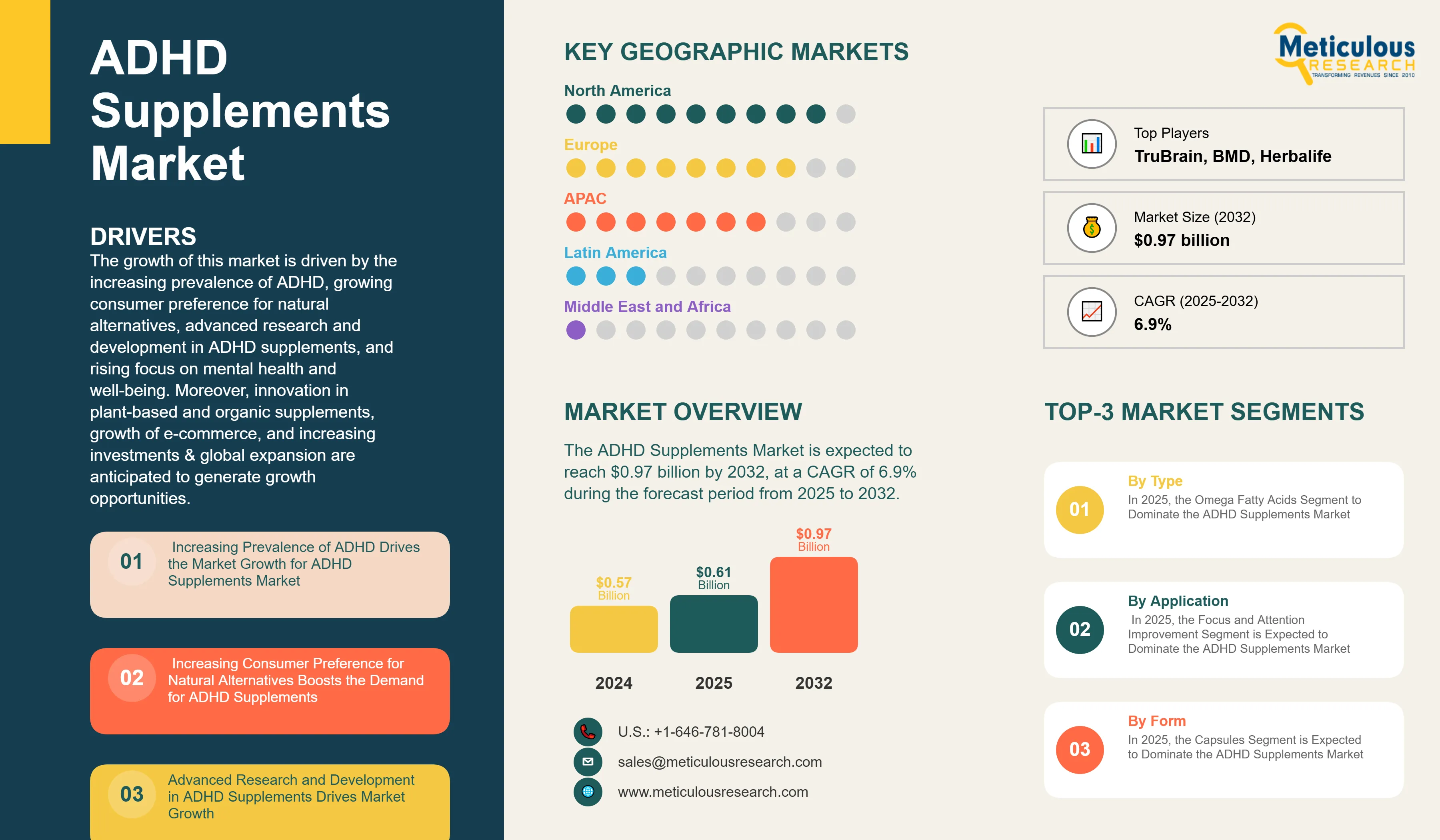
The growth of this market is driven by the increasing prevalence of ADHD, growing consumer preference for natural alternatives, advanced research and development in ADHD supplements, and rising focus on mental health and well-being. Moreover, innovation in plant-based and organic supplements, growth of e-commerce, and increasing investments & global expansion are anticipated to generate growth opportunities for the stakeholders operating in the market. Furthermore, the growing demand for customized supplements is a major trend in this market.
Key Findings ADHD Supplemen...
- By Type: In 2025, the Omega Fatty Acids Segment to Dominate the ADHD Supplements Market
- By Application: In 2025, the Focus and Attention Improvement Segment is Expected to Dominate the ADHD Supplements Market
- By Form: In 2025, the Capsules Segment is Expected to Dominate the ADHD Supplements Market
- By Distribution Channel: In 2025, the Offline Stores Segment is Expected to Dominate the ADHD Supplements Market
- By Geography: North America to Dominate the ADHD Supplements Market in 2025
Market Growth Drivers

Click here to: Get Free Sample Pages of this Report
Consumer Shift Towards Natural Alternatives
Consumers diagnosed with ADHD increasingly prefer natural treatment alternatives, such as supplements, over prescription medications due to concerns about harmful side effects. Given that ADHD treatment is often extensive and gradual, many healthcare professionals recommend natural options as a safer and more sustainable alternative to traditional medications.
Shifts in consumer lifestyles are also driving the transition toward natural supplements. Rising stress levels, changes in food consumption patterns due to busy schedules, and an increase in chronic diseases have heightened consumer awareness. As a result, many individuals are incorporating healthy foods and supplements into their daily routines, with a growing preference for natural food products and supplements.
Stimulant medications like methylphenidate, commonly prescribed for ADHD, often cause side effects such as nervousness, insomnia, nausea, and headaches. In contrast, supplements like omega-3 fatty acids offer minimal side effects and additional nutritional benefits, including enhanced brain function, improved attention, and better cognitive health. According to the 2024 CRN Consumer Survey on Dietary Supplements, 74% of U.S. adults use dietary supplements, with 55% incorporating them regularly into their diets. This growing shift toward supplements is driven by consumers’ unhealthy lifestyles and the rising prevalence of chronic diseases. As health consciousness increases, demand for natural supplements, including those for ADHD, continues to grow.
Therefore, the consumer shift towards natural alternatives contributes to an increase in the demand for ADHD supplements.
Increasing Focus on Mental Health and Wellbeing
The increasing awareness of mental health issues is significantly driving the demand for ADHD supplements. As societal stigma surrounding mental health continues to decrease, more individuals are seeking alternative and complementary treatments for conditions like attention deficit hyperactivity disorder (ADHD). According to the World Health Organization (WHO), mental health disorders are on the rise globally. This growing recognition has led people to explore natural supplements as potential solutions for managing ADHD symptoms, such as inattention, hyperactivity, and impulsivity.
ADHD, a neurodevelopmental disorder impacting millions globally, is typically managed with stimulant medications such as methylphenidate and amphetamines. However, these treatments often lead to side effects, including sleep disturbances, anxiety, and appetite changes. Consequently, many individuals are exploring alternative options, such as omega-3 fatty acids, vitamins, and minerals, which are recognized for their potential to enhance cognitive function, improve focus, and mitigate hyperactive behaviors. These supplements are widely regarded as having fewer side effects compared to traditional pharmaceutical treatments.
Additionally, the mental health movement has fueled the rise of wellness trends, encouraging individuals to take a more proactive approach to managing both their mental and physical health. With an increasing emphasis on mindfulness, nutrition, and brain health, more people—particularly parents of children with ADHD—are incorporating supplements into an integrative care strategy. Furthermore, children with ADHD often have deficiencies in essential nutrients such as magnesium, zinc, iron, and omega-3 fatty acids. Supplementing these nutrients can help alleviate symptoms linked to these deficiencies. For example, magnesium supports neurotransmitter function and brain health, potentially enhancing attention and reducing hyperactivity.
As the demand for alternative treatments rises, the ADHD supplements market is anticipated to continue its expansion. With growing research into the effectiveness of these natural options and increasing consumer awareness, more individuals are turning to supplements as part of a holistic approach to managing ADHD. Consequently, the heightened focus on mental health and well-being is expected to further drive the growth of the ADHD supplements market.
ADHD Supplements Market Opportun...
Rising Global Investments and Expansion in the ADHD Supplements Market
In recent years, ADHD supplements have attracted significant investments from key industry players looking to capitalize on the growing demand for natural alternatives. With increasing concerns about mental health and the side effects of prescribed medications, established supplement companies are focusing on developing natural ADHD solutions. In response to the consumer shift toward healthier, natural supplements, companies across the supply chain, from producers to pharmacists, are actively investing in these emerging opportunities.
For example, Thesis, a wellness startup specializing in customized cognitive performance products, has highlighted the growing consumer demand for tailored solutions in cognitive enhancement. In 2024, Thesis secured USD 8.4 million in a Series A funding round. These funds will be used to expand the company’s product range, introduce innovative products, and invest in research and development. The company’s approach, which focuses on personalized, learning-supported formulations and online sales, aligns with the increasing preference for non-formula, customized supplements in the ADHD market. The growth was further supported by investors, including Unilever Ventures.
The COVID-19 pandemic had a significant negative impact on public mental health. According to a 2021 article by the United Nations (UN), prior to the pandemic, one in five adults in the U.S. experienced mental health conditions like depression or ADHD. However, by 2021, it was reported that 80% of Americans were dealing with mental health issues such as anxiety, depression, ADHD, and grief. Doctors typically recommend treatment through therapy or medications. In this context, ADHD supplements have emerged as a natural treatment option to help alleviate symptoms of ADHD.
Market Opportunities
The Omega Fatty Acids Segment is Expected to Dominate the ADHD Supplements Market in 2025
Based on type, the ADHD supplements market is segmented into omega fatty acids, vitamins, minerals, amino acids, probiotics, and others. In 2025, the omega fatty acids segment is expected to account for the largest share of the ADHD supplements market. The segment’s significant market share is primarily driven by the well-established scientific evidence supporting the benefits of omega-3 and omega-6 fatty acids in enhancing cognitive function and alleviating ADHD symptoms. Omega-3 fatty acids, such as eicosapentaenoic acid (EPA) and docosahexaenoic acid (DHA), are known to improve focus, reduce hyperactivity, and support brain health. Furthermore, children with ADHD often have lower levels of omega-3s, making supplementation a popular choice among parents and healthcare professionals.
Additionally, omega fatty acids are considered safe with minimal side effects compared to traditional stimulant medications, making them a preferred alternative treatment. The growing popularity of plant-based and marine-based omega-3 sources, including fish oil, krill oil, and algae oil, is expected to further drive the market's growth.
Geographical Analysis
North America Dominates the ADHD Supplements Market in 2025
Based on geography, the ADHD supplements market is majorly segmented into five regions: North America, Europe, Asia-Pacific, Latin America, and the Middle East & Africa. In 2025, North America is expected to account for the largest share of the ADHD supplements market, followed by Europe and Asia-Pacific. North America's substantial market share is driven by several key factors, including the rising prevalence of ADHD, increasing consumer preference for natural foods and supplements, higher spending on health-related medications, and growing investments in the natural supplements sector. Additionally, the increasing prevalence of mental health issues and the use of prescribed medications in the region has further enhanced the appeal of supplements as a natural alternative. Moreover, the U.S. is expected to capture a larger share of the ADHD supplements market in North America in 2025.
Moreover, this region is slated to register the highest CAGR during the forecast period. This rapid growth can be attributed to several factors, including the increasing adoption of vegan and organic supplements, heightened awareness of ADHD, the expanding availability of natural and innovative supplement options, and the growing presence of both local and multinational manufacturers in the market. Additionally, rising disposable incomes in the region are enabling more consumers to invest in premium supplements.
Key Companies
The report includes a competitive landscape based on an extensive assessment of the key strategic developments that led market participants to adopt over the past three years (2021-2025). The key players operating in the ADHD supplements market are TruBrain Inc. (U.S.), Opti-Nutra Ltd. (U.K.), Viva Naturals Inc. (U.S.), FENIX Health Science, LLC (U.S.), BMD, Inc. (U.S.), Smarter Health, Inc. (U.S.), Pharmavite LLC (U.S.), Noggin Braincare Ltd (U.K.), Kirin Holdings (Japan), Fonterra Co-operative Group Ltd (New Zealand), SAN-U-VIT GmbH (Germany), Herbalife Ltd. (U.S.), Nordic Naturals, Inc. (U.S.), Life Extension Foundation Buyers Club, Inc. (U.S.), Pure Encapsulations, LLC (U.S.), Divergence Supplements, Ltd (U.K.), and ADHD Naturally (U.S.).
ADHD Supplements Industry Overview: Latest Developments from Key Industry Players
- In April 2025, Divergence Supplements Ltd (U.K.) launched Gamma Focus, a powder designed for neurodivergent & ADHD individuals.
- In June 2022, ProThera Inc. (U.S.) d/b/a SFI USA launched Equazen Pro Jelly Chews, a high dose of omega-3 fatty acids for supporting ADHD symptoms. These jelly chews were made available in over 4,000 CVS stores across the U.S.
- According to the study published in 2022, conducted by the Oregon Health & Science University (OHSU), 54% of children who received supplemental vitamins and minerals showed improvement in their symptoms, compared to 18% in the placebo group.
Market Research Summary
|
Particulars |
Details |
|
Number of Pages |
140 |
|
Format |
|
|
Forecast Period |
2025–2032 |
|
Base Year |
2025 |
|
CAGR |
6.9% |
|
Market Size |
USD 0.97 Billion by 2032 |
|
Segments Covered |
By Type
By Application
By Form
By Distribution Channel
|
|
Countries Covered |
North America (U.S., Canada), Europe (Germany, U.K., Italy, France, Spain, and Rest of Europe), Asia-Pacific (China, India, Japan, Australia, and Rest of Asia-Pacific), Latin America (Brazil, Mexico, Argentina, Colombia, and Rest of Latin America), and the Middle East & Africa (Saudi Arabia, UAE, Egypt, South Africa, and Rest of Middle East & Africa) |
|
Key Companies |
TruBrain Inc. (U.S.), Opti-Nutra Ltd. (U.K.), Viva Naturals Inc. (U.S.), FENIX Health Science, LLC (U.S.), BMD, Inc. (U.S.), Smarter Health, Inc. (U.S.), Pharmavite LLC (U.S.), Noggin Braincare Ltd (U.K.), Kirin Holdings (Japan), Fonterra Co-operative Group Ltd (New Zealand), SAN-U-VIT GmbH (Germany), Herbalife Ltd. (U.S.), Nordic Naturals, Inc. (U.S.), Life Extension Foundation Buyers Club, Inc. (U.S.), Pure Encapsulations, LLC (U.S.), Divergence Supplements, Ltd (U.K.), and ADHD Naturally (U.S.). |
Frequently Asked Questions
Related Tags
How We Built This Intelligence
Table of Contents
Expand allAccess & Licensing
Choose how you access this intelligence — from a standalone data pack to organization-wide access. Every option is delivered within 24–48 hours and backed by analyst support.
Related Statistics & Insights
Need something more specific?
A custom-scoped study can target a single segment, geography, or competitor set — or answer a board-level question this syndicated report doesn't. Tell an analyst what decision you're making and we'll scope it.